

-
Açıklama
The Psychology of Crowds - Gustave Le Bon | Turkish Book
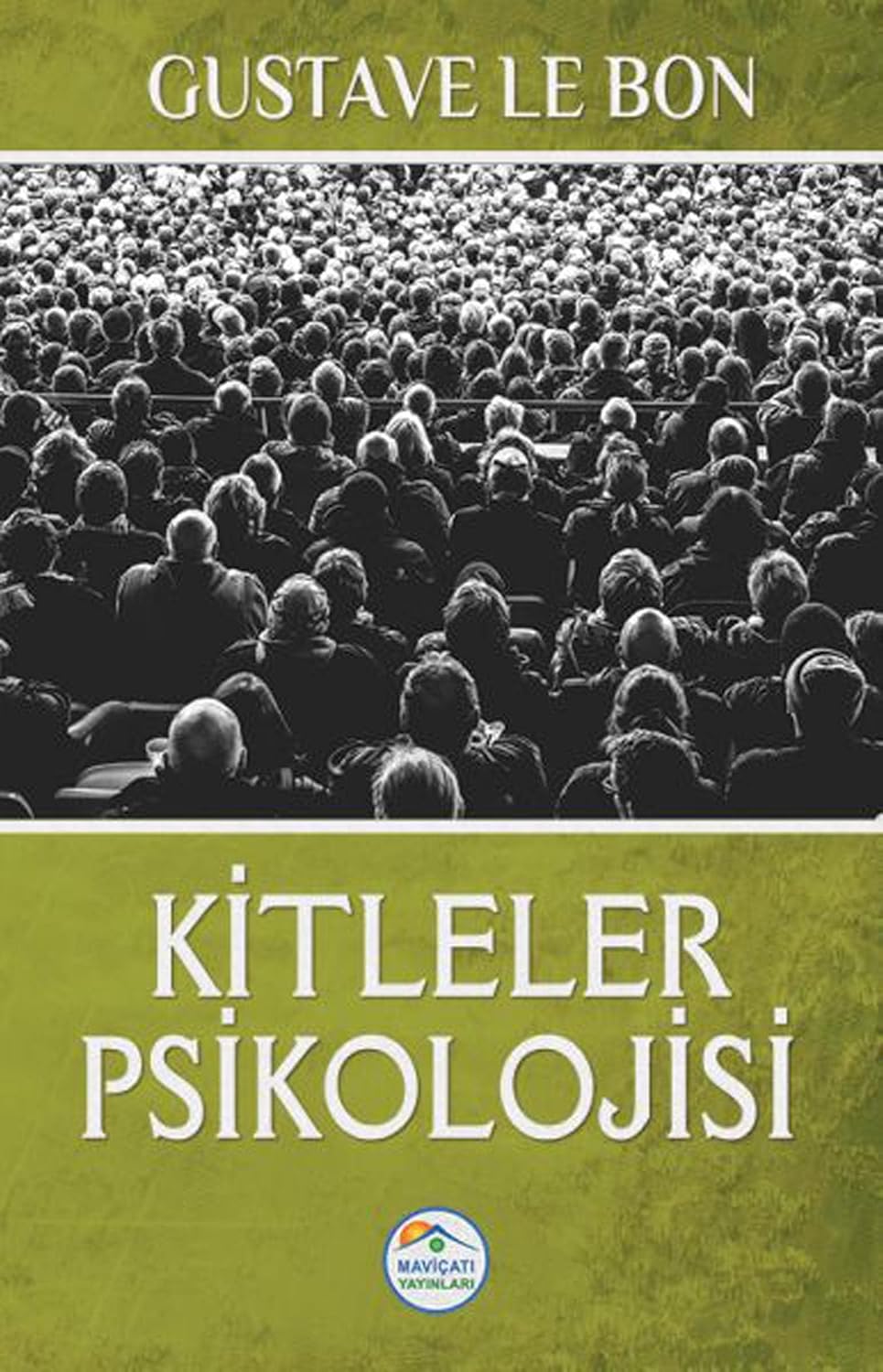
Gustave Le Bon's "The Psychology of Crowds" is a masterpiece that examines how individuals behave and feel differently when they become part of a crowd. This Turkish Book delves deeply into the collective spirit of crowds, exploring how individuals think, feel, and behave differently than they do when they are alone. While explaining the intricacies of crowd psychology and how individuals acquire different characteristics within a crowd, Le Bon also provides a detailed explanation of the concept of a psychological crowd.
In the book, the most striking feature of a psychological crowd is emphasized as the individuals forming the crowd acting with a collective spirit. This collective spirit causes individuals to act in completely different ways than what they feel, think, and do when they are alone. Crowds merge with one another for a temporary period, forming a new and temporary entity. This process occurs similarly to how the cells of a living organism come together to acquire new characteristics.
Individuals within a crowd act in completely different ways than the behaviors and thoughts they exhibit when they are alone. While acknowledging the difficulty of finding the reasons for these differences, Le Bon attempts to understand the psychological dynamics of crowds. "The Psychology of Crowds" offers readers a comprehensive guide to understanding how crowds behave and how individuals change within a crowd. Holding an important place among Turkish books, this work is an indispensable resource for anyone wishing to develop an in-depth understanding of crowd psychology.
The Psychology of Crowds - Gustave Le Bon | Turkish Book
Gustave Le Bon's "The Psychology of Crowds" is a masterpiece that examines how individuals behave and feel differently when they are in a crowd. This Turkish Book analyzes the collective spirit of crowds, emphasizing how individuals think, feel, and behave differently when they are part of a mass. Le Bon explains the finer details of mass psychology and how individuals acquire new characteristics in the context of a psychological crowd.
The book emphasizes that the most striking feature of a psychological mass is that the individuals forming the mass acquire a collective spirit. This collective spirit causes them to act, feel, and think differently than when they are alone. Masses merge together for a short time into a new and temporary entity, similar to how cells in a living organism develop new characteristics when they come together.
Individuals in a mass act completely differently than when they are alone. Le Bon acknowledges that finding the causes of these differences is difficult, while attempting to understand the psychological dynamics of masses. "The Psychology of Crowds" offers readers a comprehensive guide to understanding how masses behave and how individuals change within a mass. This work is an essential resource for anyone wishing to develop an in-depth understanding of mass psychology and holds an important place among Turkish Books.